
Spill Containment Equipment
Spill containment equipment is used to prevent oils, chemicals and other liquids from spreading when a leak or accidental spill occurs. These systems provide secondary containment for drums, IBCs, tanks and other containers, helping factories, warehouses and industrial facilities protect floors, drains and surrounding areas from contamination.
Spill Containment Products
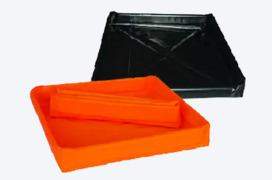
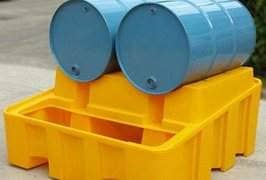
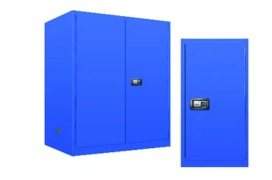
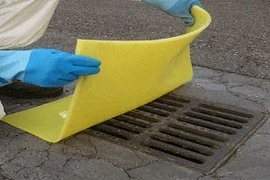
Enviroguard spill containment products including Flexible Spill Containment Berms, Drum Trolley, Spill Containment Pallets, Containment Trays, IBC and Spill Pallets, Flood Barriers, Drum Storage Racks, Drain Covers. Our containment products meet oil storage regulations as well as promoting good housekeeping and improved safety in the workplace.
Enviroguard Solutions offers a variety of spill containment equipment to keep your workplace spill proof. We generally have a ready stock of the running items. We are happy to custom manufacture the products based on your requirement and applications. All you need to do is ask the sales specialist for the same, Get quote for best price. For more information call us on (+91) 9833845693.
What Spill Containment Equipment Is Legally Required in Indian Factories?
Indian factories don't get a single rulebook that says "buy this exact spill kit." Instead, four separate regulations each require different equipment — and most sites fall under at least two of them. Here's what each one actually means for your procurement list.
What spill containment equipment should factories have in India?
Factories handling oils, chemicals or other hazardous liquids should assess their storage and handling risks and provide suitable spill prevention, secondary containment and emergency response equipment. Depending on the materials and site conditions, this may include spill pallets, containment berms, drain covers, spill kits and other response equipment. Specific requirements can also depend on applicable factory, environmental, hazardous-waste, fire-safety and petroleum regulations and the conditions of the site's approvals.
What spill containment do CPCB and State Pollution Control Boards require?
Your Consent to Operate (CTO) conditions — issued by CPCB or your state pollution control board — typically require secondary containment at every hazardous liquid storage point. The standard rule: containment must hold 110% of the largest single container, or 25% of total stored volume, whichever is greater. A 200-litre drum needs a spill pallet with at least a 220-litre sump. Check your specific CTO — conditions vary by state and industry.
What equipment does the Hazardous Waste Rules require for chemical and oil storage?
The Hazardous and Other Wastes (Management and Transboundary Movement) Rules 2016 require that any facility generating, storing, or handling hazardous waste must have spill prevention and containment measures in place. This means spill berms or drum pallets under every hazardous liquid storage area, drain protection to prevent contamination of stormwater, and documented disposal procedures for used absorbents — which are themselves classified as hazardous waste.
What does PESO require for petroleum storage facilities?
PESO (Petroleum and Explosives Safety Organisation) licensing conditions apply to any site storing petroleum products. The specific containment requirements depend on your storage class and volume, but generally include secondary containment around tank farms and drum storage, fire-rated separation, and spill response equipment proportional to your stored volume. Enviroguard supplies containment pallets, trays, and berms sized to meet PESO storage class requirements.
What boom and response equipment do Indian ports need under NOSDCP?
The National Oil Spill Disaster Contingency Plan (NOSDCP) uses a three-tier framework for marine spill preparedness. Tier 1 (operator level) requires on-site containment boom, marine spill kits, and trained deployment crews at every port terminal and jetty. The boom length and type depends on your berth size and water conditions — most single-berth terminals need 100–300 metres of boom. Enviroguard manufactures boom in custom section lengths for NOSDCP Tier 1 compliance.