
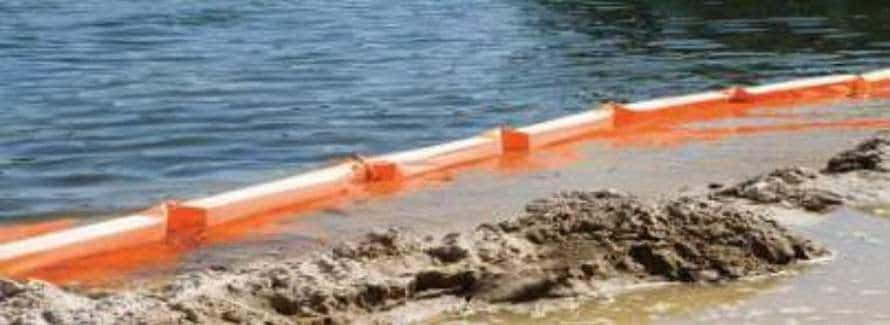
Floating Silt Curtains & Turbidity Barriers
Silt curtains also called turbidity curtains or silt barriers are floating turbidity barriers used to minimize sediment transportation from a disturbed area in and around a water body. They are used for dredging, marine construction, port and harbour development, bridge works and environmental protection projects across India.
Without a silt curtain, disturbed sediment spreads through the water column and can travel large distances from the work site — damaging nearby ecology and triggering environmental compliance issues.
Suspended sediment reduces water quality and can damage sensitive marine ecology — mangroves, corals, sea grass and shellfish beds near the work site.
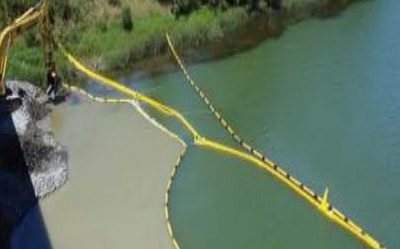
Silt Curtain Types (Type 1, 2, 3)
They are classified into three types (1–3) based on water energy and current speed at the deployment site.
Type 1: Light-weight inshore curtain for calm, sheltered water with no significant wind or current.
Type 2: Medium-weight curtain for moderate currents and protected waters, with higher tensile strength than Type 1.
Type 3: Heavy-duty curtain for higher-energy sites — currents up to 1.5 m/s and moderate wave exposure up to 1.5 m, including ports, harbours and nearshore works.
Turbidity Barrier Applications
- Dredging operations.
- Marine construction projects and access using inflatable work boats.
- Port and harbour development.
- Bridge construction over water.
- Shoreline and coastal protection works.
- Environmental protection zones.
- Offshore pipeline and cable laying.
Silt Curtain Types & Specifications
| Type | Water conditions | Typical use | Section length | Freeboard | Standard draft |
|---|---|---|---|---|---|
| Type 1 | Calm / sheltered, no significant current | Lakes, ponds, inshore, protected canals | 15 m | 400 mm | 1.5 m |
| Type 2 | Moderate currents, protected waters | Rivers, estuaries, tidal channels | 15 m | 400 mm | 1.5 m |
| Type 3 | Currents up to 1.5 m/s, waves up to 1.5 m | Ports, harbours, nearshore works | 15 m | 400 mm | 1.5 m |
Construction (all types): Float/body fabric — PVC coated polyester, 750 gsm (approx. 22 oz). Skirt — geotextile. Floats — closed-cell PE foam. Tension member — wire rope below the float. Bottom ballast — 10 mm GI chain. Sections join for the total length required. Other draft depths available on request.
How to Install a Silt Curtain
1. Float and Freeboard
The foam-filled float runs along the top of the curtain, keeping it upright at the water surface. The freeboard — the section above water — prevents surface-layer sediment plumes from spilling over the barrier.
2. Curtain / Draft
The geotextile skirt (draft) extends below the waterline. The permeable fabric allows water to pass through while trapping fine sediment particles, confining the turbidity plume to the work zone.
3. Chain Ballast
A galvanised chain ballast runs along the bottom hem, helping maintain the curtain's vertical position and reducing the risk of sediment bypassing beneath the barrier.
4. Anchoring and Connecting Sections
Individual 15 m curtain sections are connected using D-ring connectors and anchored to the seabed with mooring lines. The anchor system resists drag loads appropriate to Type 1, 2, or 3 water conditions.
5. Sediment Collection and Removal
Sediment accumulates inside the enclosed zone, settles to the bottom, and is removed by dredge or suction pump. On completion, retrieve the curtain by pulling top and bottom cables together to minimise trapped material release.
Installation Best Practices
Proper installation helps the turbidity barrier perform effectively during dredging and marine construction. Follow these site-preparation and deployment basics for better sediment control.
- Inspect water depth, current speed, wind and wave conditions before deployment.
- Place the curtain parallel to flow where possible to reduce drag load on anchor points.
- Secure all anchor points before deployment in moving water — never deploy unsecured.
- Connect sections tightly using D-ring connectors and minimise the number of joints.
- Check tension, alignment and anchor stability after installation and after any tidal change.
- Inspect the curtain periodically for fouling, fabric wear and anchor drift during deployment.
- Remove sediment from inside the enclosed zone regularly to maintain barrier effectiveness.
Complement your sediment control with our range of marine environmental products: Oil Absorbent Booms and Oil Containment Booms for spill response, and Oil Spill Response Equipment for comprehensive site protection.
Which type of silt curtain do I need for my project?
Check your site's current speed and wave exposure. Calm water with no current — a lake, pond, or sheltered inshore site — needs Type 1. Moderate tidal or river current needs Type 2. Open ports and harbours with currents up to 1.5 m/s and waves up to 1.5 m need Type 3.
Can Enviroguard manufacture silt curtains in custom lengths for my dredging project?
Yes. Standard sections are 15 metres, connected end-to-end to cover any total length. Standard draft is 1.5 m; other draft depths, fabric weight and ballast can be matched to your site. Share your project layout for a free sizing recommendation.
Does Enviroguard supply silt curtains for Indian port and dredging projects?
Yes. Enviroguard supplies Type 1, 2, and 3 silt curtains for dredging operations, port construction, bridge works, and environmental protection projects across India. We manufacture in Mumbai with delivery timelines based on curtain type, length, and project schedule.