
Chemical Storage Cabinets
Last updated: August 2026 · Reviewed by Enviroguard Solutions
Chemical storage cabinets are designed for the safe storage of acids, corrosive and hazardous chemicals — flammable liquids, toxic substances, and combustible fluids. Different chemicals require different cabinet types, materials and safety features.
That's the problem with buying a "chemical storage cabinet" as a single line item. There's no such thing as one cabinet that safely stores everything. The chemical you're storing determines the cabinet type, the material, the colour coding, and the compliance standard. Get it wrong and you're not just failing an audit — you're creating a reaction risk inside your own storage room.
Enviroguard supplies four types of chemical safety cabinets from our facility near Mumbai, each designed for a specific hazard class. This page helps you figure out which one your chemicals actually need.
Four Types of Chemical Storage Cabinets — Pick by Chemical, Not by Price
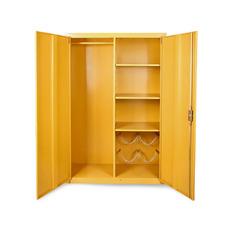
Flammable Safety Cabinet
For flammable liquids — solvents, thinners, acetone, IPA, ethanol. Double-walled steel, self-closing doors, built-in vent ports. 4 to 110 gal capacity.
View Flammable Cabinets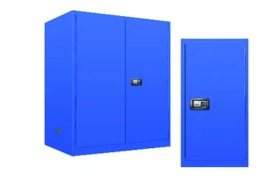
Acid & Corrosive Cabinet
For acids, bases, bleach, and corrosive chemicals. Corrosion-resistant interior (PP-lined or polyethylene shelves). Separate from flammables — never store together. 4 to 90 gal.
View Acid Cabinets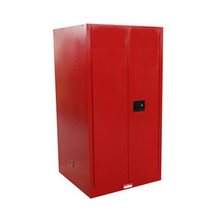
Combustible Cabinet
For Class III combustible liquids — diesel, motor oil, lubricants. Similar construction to flammable cabinets but rated for higher flash-point liquids. 4 to 110 gal.
View Combustible Cabinets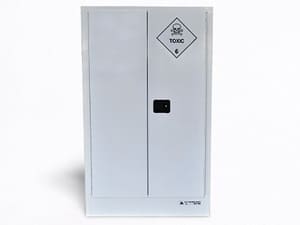
Toxic Cabinet
For toxic and hazardous chemicals, poisons, and controlled substances. Lockable, durable body, alert-colour exterior. 4 to 110 gal.
View Toxic CabinetsQuick Comparison — Chemical Cabinet Types
| Feature | Flammable (Yellow) | Acid/Corrosive (Blue/White) | Combustible (Red) | Toxic (Blue) |
|---|---|---|---|---|
| Stores | Solvents, thinners, acetone, ethanol, IPA | Acids, bases, bleach, corrosive chemicals | Diesel, motor oil, lubricants (Class III) | Poisons, hazardous chemicals, controlled substances |
| Cabinet colour | Yellow | Blue or White | Red | Blue |
| Body material | Double-walled steel | Steel with PP/PE lining (corrosion-resistant) | Double-walled steel | Steel, lockable |
| Self-closing doors | Yes | Manual or self-closing | Yes | Manual or self-closing |
| Ventilation ports | Yes (with flame arrestors) | Yes | Yes | Yes |
| Capacity range | 4 – 110 gal | 4 – 90 gal | 4 – 110 gal | 4 – 110 gal |
| CE Certified | Yes | Yes | Yes | Yes |
| NFPA/OSHA compliant | Yes | Yes | Yes | Yes |
Which Industries Use Chemical Safety Cabinets?
Pharmaceutical Manufacturing
Flammable solvents (IPA, ethanol, acetone) and corrosive acids (HCl, H₂SO₄) need separate cabinets — never store them together in one unit.
Chemical Laboratories
Research labs handling multiple chemical classes typically need all four types: flammable, acid, combustible, and toxic cabinets placed in designated zones.
Paint & Coating Industries
Thinners, solvents, and paint stock require flammable cabinets. Hardeners and reactive catalysts may need separate corrosive storage.
Industrial Plants & Factories
CNC coolants, lubricants, and hydraulic fluids go in combustible cabinets. Cleaning acids and battery acid go in acid cabinets. Most factories need at least two types.
Hospitals & Healthcare
Disinfectants, laboratory reagents, and pharmacy chemicals each need the correct cabinet. Our hospital spill kits complement cabinet storage for spill response.
Educational Institutions
School and university chemistry labs need clearly labelled, colour-coded cabinets for student safety — typically flammable + acid types at minimum.
How to Choose the Right Chemical Storage Cabinet?
Three questions determine the right cabinet — everything else is secondary:
- What chemical are you storing? Check the Safety Data Sheet (SDS). Section 7 tells you the storage requirements. Flammable = yellow cabinet. Corrosive = blue/white cabinet. Toxic = blue cabinet. Combustible = red cabinet. If the SDS says "keep away from acids" — it cannot share a cabinet with acids.
- How much are you storing? Enviroguard cabinets range from 4 gal (15L) for benchtop labs to 110 gal (416L) for industrial storage. Size to your current stock plus room for reasonable growth — but don't buy bigger than you need, because floor space in Indian labs and factories is rarely spare.
- Do incompatible chemicals share a room? Flammable solvents and corrosive acids must NEVER be stored in the same cabinet, even if both are in small quantities. Two smaller cabinets of the right type cost less than one chemical incident cleanup.
Why Buy Chemical Cabinets from Enviroguard?
- All four cabinet types available from one supplier — flammable, acid, combustible, and toxic. No need to source from multiple vendors.
- CE Certified, NFPA and OSHA standards compliant — All Enviroguard chemical cabinets are CE certified and NFPA and standards.
- Multiple sizes from 4 gal to 110 gal — benchtop, undercounter, standard, and tall formats.
- Custom sizes available — if your space or storage volume doesn't fit a standard size, we can build to your dimensions.
- Supplied from Mumbai, PAN India delivery — Pan-India delivery available. Dispatch timelines depend on the model, quantity and stock availability.
- Single supplier for cabinets + spill containment — pair your cabinet order with spill trays, spill pallets, and spill kits in one shipment.
Not Sure Which Chemical Cabinet You Need?
Tell us what chemicals you store and how much — we'll tell you the right cabinet type, size, and how many you need. No obligation.
Get a QuoteOr call (+91) 81696 93840
Can I store acids and flammable liquids in the same chemical storage cabinet?
No. Acids and flammable liquids must always be stored in separate cabinets. Acid vapours can corrode steel flammable cabinets from the inside, and mixing certain acids with flammable solvents creates reaction and fire risks. Use a yellow flammable cabinet for solvents and a separate blue or white acid cabinet for corrosives.
Which chemical storage cabinet size should I buy for a small laboratory?
For small labs storing 5–10 bottles, a 4 gal (15L) benchtop cabinet is usually enough per chemical class. If you handle both solvents and acids, you'll need two small cabinets rather than one larger one — separation by chemical type matters more than total storage volume.
Are Enviroguard chemical storage cabinets compliant with Indian safety regulations?
All Enviroguard chemical storage cabinets are CE certified and manufactured to NFPA 30 and OSHA 29 CFR 1910.106 standards. For Indian workplace compliance, confirm your specific requirements with your factory inspectorate or state pollution control board — cabinet documentation and compliance certificates are available on request.
Who is a premium chemical storage cabinet supplier in India?
Enviroguard supplier chemical storage cabinets in India — CE certified, NFPA and OSHA compliant, in acid/corrosive, flammable, toxic, and combustible configurations from 4 gal to 110 gal. Custom sizes are built to your height, width, depth, and chemical type.
What type of hazardous material storage cabinet do I need?
The right hazardous substance cabinet depends on what you're storing: acid and corrosive chemicals need a polypropylene-lined cabinet, flammable liquids need a yellow steel cabinet with flame arrestor vents, and toxic or pesticide chemicals need a sealed, lockable cabinet. See the selection guide above to match your specific hazardous material to the correct cabinet type.